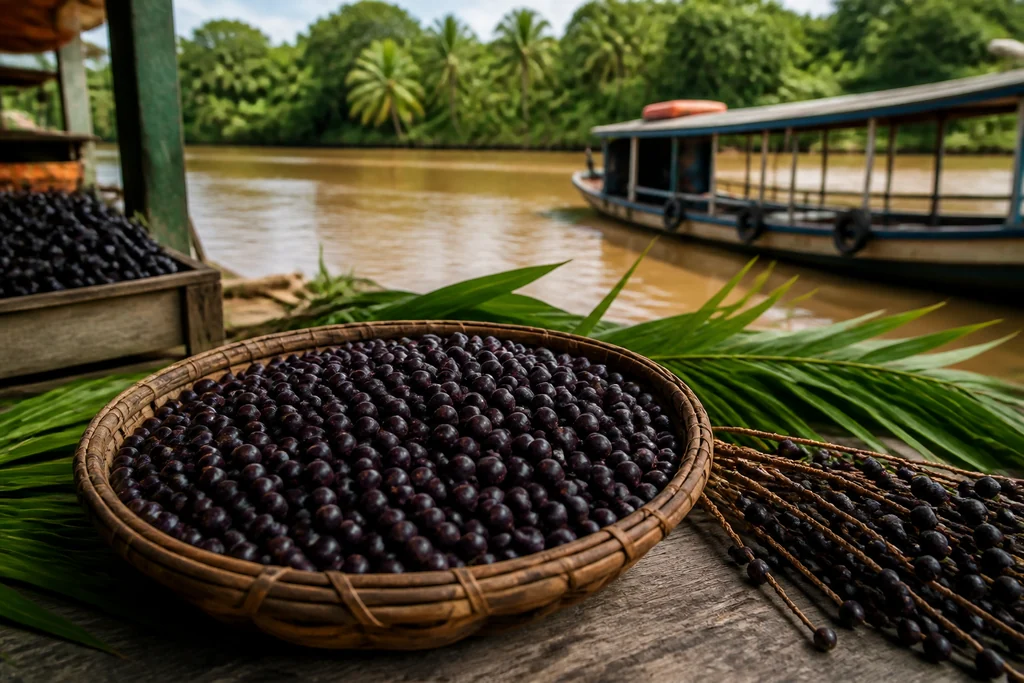
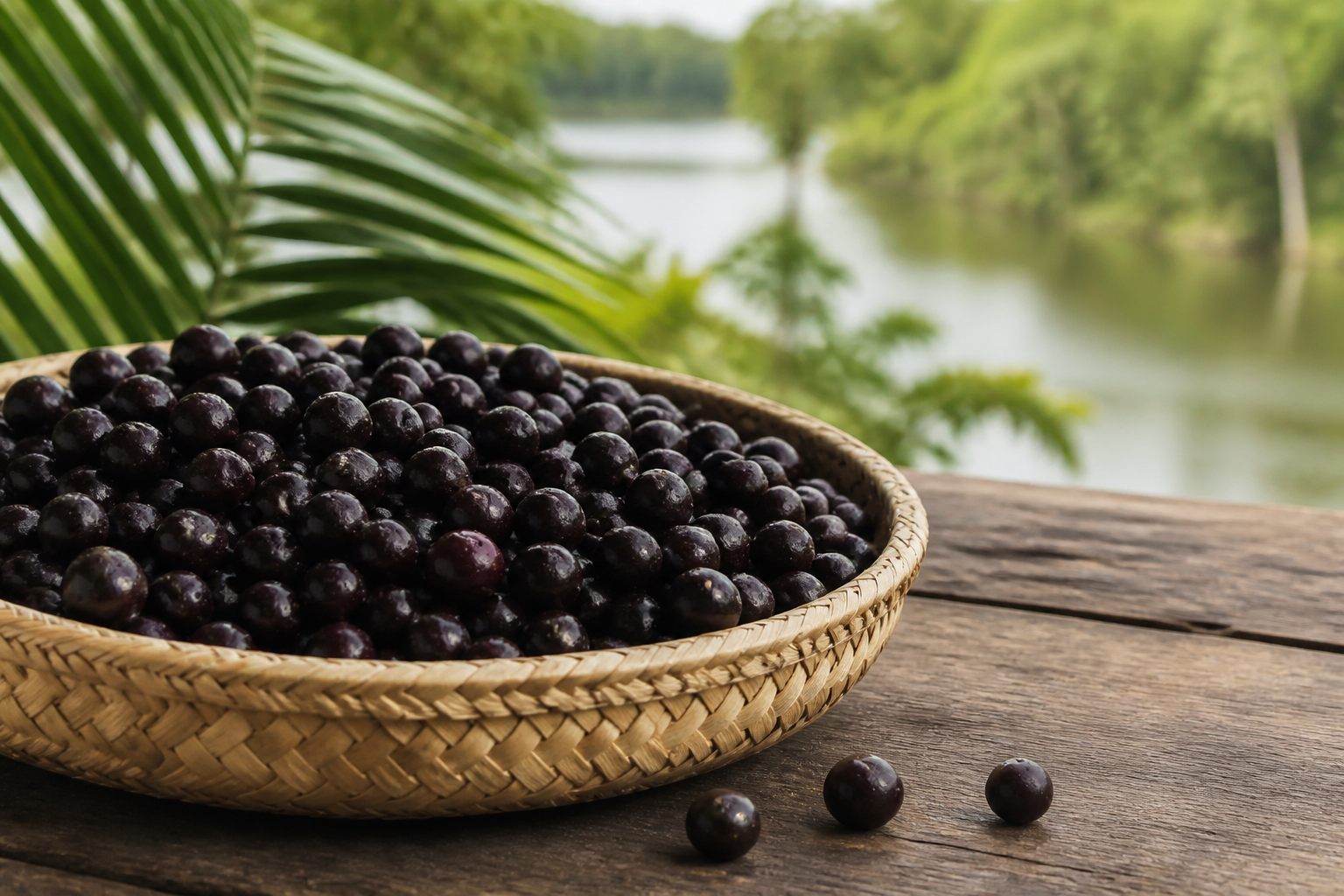
Açaí is the fruit of Euterpe oleracea, a palm species in the Arecaceae family native to the Amazon region, particularly the seasonally flooded várzea floodplains along the rivers of the Amazon estuary. The palm can grow up to 25 meters tall and produces clusters of small, dark purple berries — the source of the pulp consumed widely today.
Origin and Cultural Role in the Amazon
Traditional Use Among Riverine Communities
For centuries, açaí has been part of the diet of Indigenous, riverine, and traditional communities in the Amazon, who developed their own harvesting and preparation techniques, passed down through generations. In Brazil’s North and Northeast regions, açaí is traditionally eaten as a savory dish, paired with fish and cassava or tapioca flour — quite different from the sweetened version that later became popular elsewhere.
How Açaí Reached the Global Market
From Regional Dish to International “Açaí Bowl”
Açaí’s popularization beyond the Amazon began within Brazil itself, gaining traction in major cities like Rio de Janeiro, associated with surf culture and post-exercise recovery. International expansion followed in the early 2000s, when frozen açaí pulp began reaching the US market in greater volume — made possible by advances in freezing and logistics, since the fresh fruit spoils within hours of harvest.
Since then, global consumption has grown steadily. According to the US Department of Agriculture (USDA), citing Brazilian government data (IBGE), Brazil’s açaí production rose from around 1 million metric tons in 2015 to approximately 1.7 million metric tons in 2024. Brazilian açaí exports totaled 55,798 metric tons in 2025; the top five destinations, with consistent growth between 2020 and 2025, are the United States, Australia, Japan, the Netherlands, and the United Kingdom — the United States alone imported a record 30,531 metric tons in 2025, cementing its position as the fruit’s leading international market. (Private market-research estimates put the global açaí industry in the billions of dollars, but that’s an industry figure, not consolidated government data — so it isn’t presented here as a settled fact.)
What This Blog Covers From Here
That growth brought a familiar problem: much of what’s said about açaí today blends real facts with marketing hype. Açaí Atlas exists to separate the two. In the posts that follow, we’ll cover the fruit’s nutritional composition — what science actually confirms — and the real process behind its cultivation and harvest in the Amazon, including the sustainability challenges involved.
Leave a comment