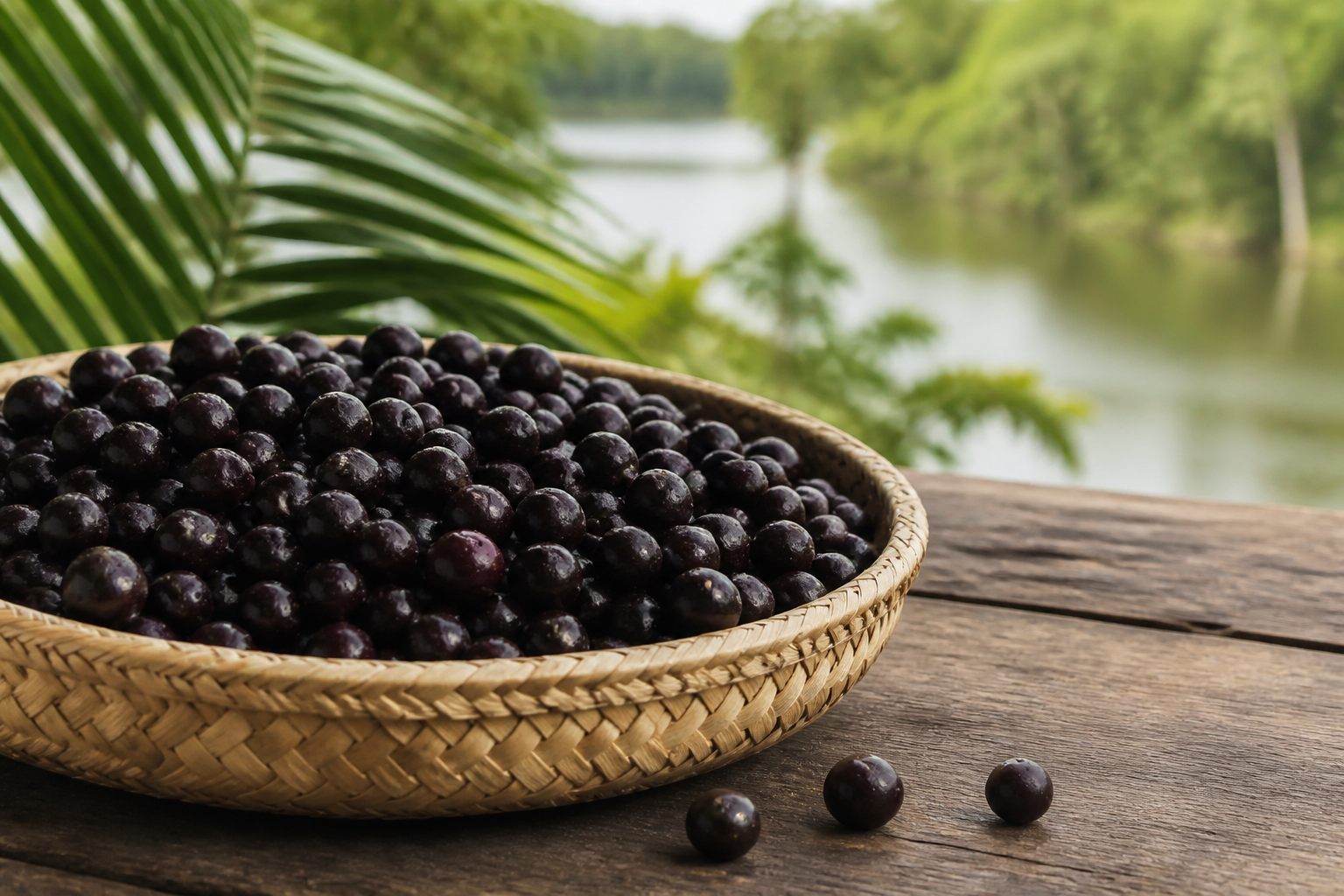
Açaí made its way to the rest of the world the same way a lot of Amazonian products have: first as a curiosity, then as a trend — and, slowly, as something worth actually understanding. Açaí Atlas exists for that: taking açaí seriously.
From the Amazon to a global conversation
Long before it became a bowl ingredient in São Paulo, Los Angeles, or Lisbon, açaí was — and still is — an everyday food for riverside communities across the Amazon, harvested and prepared in ways that differ from one community and region to the next. That origin isn’t a decorative detail: it’s the starting point for nearly everything worth knowing about the fruit, from its actual nutritional makeup to why its price swings so much through the year.
Açaí Atlas grew out of that same dual purpose: telling this story from the Amazon outward, for an audience that spans well beyond the region itself. The project was built with an international, multilingual outlook from day one — some of our content already exists in more than one language, and coverage in additional languages continues to grow.
What you’ll find here
We organize our coverage around a few areas: culture and origin, science and nutrition, production and the supply chain, market trends, and the everyday ways people eat açaí. Not every topic gets the same treatment — a piece on the fruit’s history doesn’t call for the same level of scrutiny as one about possible health effects, and we treat that difference as part of the job, not a technicality.
How we handle evidence and sources
Content grounded in science, data, or verifiable claims draws on identifiable sources — studies, official databases, recognized institutions — to the extent appropriate for that kind of content. We keep scientific evidence, tradition, market data, and our own editorial take separate: they’re different things, and we treat them that way.
Health and nutrition content gets a level of caution proportional to its risk: the closer a claim comes to influencing someone’s health decisions, the more verification it needs before publication — which can include, when appropriate, review by a qualified professional before it goes live.
When we find an error, when a relevant source changes, or when new evidence justifies revisiting something we’ve written, we correct the published content.
AI tools can support us with research, organization, analysis, and localizing content across languages. But editorial responsibility for what we publish — what goes live, and why — is always human.
Who’s behind Açaí Atlas
Açaí Atlas is edited by Joel, who is responsible for the editorial decisions behind this space: what gets published, how it’s verified, and when something needs correcting. Development and technical operations for the project are handled by Norte Mídia.
Found an error or have a suggestion? Our contact page has more details.